Beyond the Barrier: How Joshua Mantey is Reimagining Oral Drug Delivery
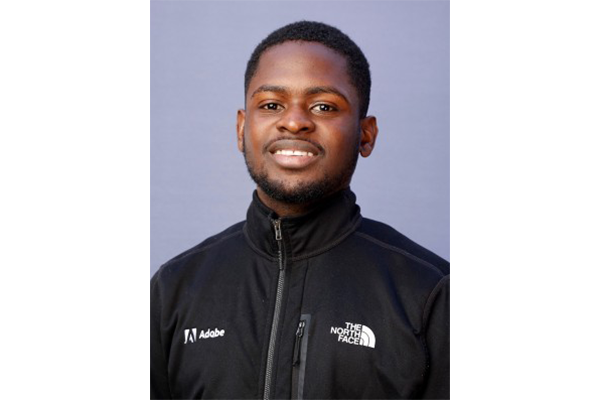
Joshua Mantey, PhD’29, is a chemical engineering researcher at Northeastern’s SymBioSys Lab, where he applies machine learning and molecular dynamics simulations to improve how oral drugs are absorbed through the intestinal mucus barrier. He aims to take the knowledge and experience from his research to create a lasting beneficial impact on human health.
Joshua Mantey is pursuing his PhD in chemical engineering at Northeastern University. During his undergraduate studies, where he completed his bachelor’s in petrochemical engineering at Kwame Nkrumah University of Science and Technology in Ghana, he won multiple awards for his academic excellence, as well as conducted research on amino acids as corrosion inhibitors and the role of bitumen in road production. After completing his degree, Mantey was selected to serve as a teaching and research assistant for the university based on his outstanding academic performance. This experience sparked his passion for research and ultimately inspired him to pursue doctoral studies.
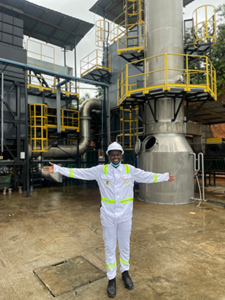
Mantey at his internship at a petroleum company in Ghana. Courtesy photo.
Since Mantey has a specialized background in petrochemical engineering, he decided to broaden his expertise with a chemical engineering degree. He was initially drawn to Northeastern because of its location in Boston—being a biotech and biomedical hub—as well as the university’s reputation for academic research. After completing laboratory rotations his first year, Mantey discovered his passion for computational work, and wanted to augment his background in experimental research. When he researched faculty at the university, he noted that their research projects aligned with his prior work, and decided to join the SymBioSys Lab at Northeastern, run by assistant professor of chemical engineering, Srirupa Chakraborty.
Research and AGSA
Mantey’s research at the SymBioSys Lab focuses on studying how the mucus layer of the intestines impacts oral drug delivery to the bloodstream. Most medications taken orally are not fully utilized in the bloodstream due to the mucus layer that prevents foreign substances from entering the intestinal system. Mantey uses machine learning, AI, and molecular dynamics simulations to study how oral medications interact with fatty acids and bile salts present in the intestinal mucus layer—molecules that influence how substances are absorbed through it. From this research, their goal is to engineer pharmaceuticals to mimic the interactions the signaling molecules have with the mucus layer to allow optimal absorption of oral drugs into the intestines and therefore the bloodstream. This work aims to improve treatments for cystic fibrosis patients.
Mantey has appreciated Northeastern’s support, particularly access to high-performance computing resources like the H200 GPUs available through Northeastern’s FASTER computing cluster. Mentorship from his supervisor, combined with institutional support, also gave him the opportunity to present this research at the AIChE conference last November—where he connected with inspiring collaborators and began building a professional network he hopes to carry with him into his career.
Outside of research, Mantey is the Career Chair and Mentorship Chair for the African Graduate Student Association (AGSA). He took on these roles to develop his professional skills while connecting with a community of driven, like-minded students. Mantey is passionate about serving others, as evidenced by his dedicated schedule of one-on-one mentorship sessions to guide peers through academic challenges, research opportunities, and career planning. Recently, Mantey spear-headed a webinar for the members of AGSA, to which he invited a representative from the Office of Global Services to present and provide practical advice for those looking for on-campus employment. Through these initiatives, Mantey has contributed to a supportive environment where students can build professional networks and develop skills essential for both academic and career success.
Advice and mentorship
For prospective PhD students, Mantey’s advice is straightforward: “you should love what you are doing.” Without genuine passion for the work, he warns, burnout becomes a real risk. He also emphasizes the importance of finding a good lab environment and building a strong relationship with your advisor—two factors that shape the day-to-day experience of a PhD more than anything else.
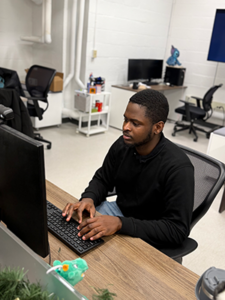
Mantey completing work in the lab. Courtesy photo.
Mantey also encourages students not to finish their PhD with the same skillset they arrived with. In his own program, he has sharpened his research abilities—including how he reads, evaluates, and critiques academic work—while also developing his communication and presentation skills to the point where he can convey complex ideas to audiences of any background.
Mantey speaks warmly of the mentorship he has found at Northeastern. He highlights Professor Chakraborty in particular, noting that her investment in students extends well beyond the lab: “it is not only limited to research, she cares about people and always wants to see improvements from within her students’ fields and personal life.” He also credits Behrooz Satvat, a teaching professor with whom he took several core courses, for consistently pushing students to reach their potential and holding high expectations for their success.
Looking ahead
Mantey is grateful for how Northeastern’s PhD program has sharpened both his technical expertise—particularly in AI—and his ability to lead and collaborate. Looking ahead, he hopes to complete a co-op that connects his research directly to industry applications, putting his skills to work in a practical setting. Beyond that, he plans to move into industry, keeping an open mind about where his expertise will take him.
Mantey’s driving motivation is clear: “I want my research to create improvement in the world and improvement of individuals’ health.” With a goal of solving unmet needs in the medical industry, he plans to carry the skills and expertise he has built at Northeastern into work that leaves a lasting mark on how drugs are delivered—and on the lives of the patients who depend on them.